

Steel Fire Doors vs. Wooden Fire Doors: How to Choose the Right Fire Door for Your Project?
1. Understanding Steel Fire Doors and Wooden Fire Doors
Fire doors are an essential part of a building's passive fire protection system. They are designed and tested to help prevent the spread of fire and smoke between different areas of a building under specified conditions.
Steel fire doors and wooden fire doors are two common types of fire doors used in the construction industry. When manufactured, tested, installed, and maintained in accordance with relevant requirements, both types can provide the required fire resistance performance.
However, they differ in materials, construction, appearance, maintenance requirements, and typical applications.
Choosing the right fire door involves more than simply comparing prices. It is important to consider the building's purpose, architectural design, fire safety requirements, and daily operating environment.
2. Main Differences Between Steel Fire Doors and Wooden Fire Doors
1. Steel Fire Doors
Steel fire doors are typically manufactured using steel sheets, fire-resistant core materials, and specially designed door frames. Their metal construction makes them suitable for a wide range of commercial, industrial, and public building environments.
Key features include:
Strong Metal Construction: Durable steel door leaves and frames provide a robust structure.
Surface Finishes: Available with powder coating and other suitable surface treatments.
Wide Range of Applications: Suitable for various commercial and industrial building environments.
Single and Double Leaf Options: Available in both single-leaf and double-leaf configurations.
Customizable Designs: Vision panels and different hardware options can be incorporated where permitted by the approved product design.
Various Fire Ratings: Available in different fire resistance ratings according to applicable testing and certification requirements.
2. Wooden Fire Doors
Wooden fire doors are typically manufactured using fire-resistant timber components and specialized fire-resistant core materials. With their attractive decorative appearance, they are often used in buildings where interior aesthetics and architectural coordination are important.
Key features include:
Natural Wood Appearance: Provides a warm and elegant decorative finish.
Wide Range of Applications: Suitable for hotels, office buildings, residential properties, and other interior spaces.
Customizable Designs and Sizes: Different designs and dimensions are available within the applicable tested and approved configurations.
Hardware Options: Can be equipped with suitable locks, hinges, door closers, and other hardware accessories.
Fire-Rated Vision Panels: Fire-rated glass vision panels can be incorporated where permitted by the approved product design.
3. Which Buildings Are Better Suited for Steel Fire Doors?
Steel fire doors are commonly used in areas where metal construction, durability, and functionality are important considerations.
1. Industrial Facilities and Warehouses
Factories and warehouses often require fire doors between production areas, storage spaces, equipment rooms, and designated fire compartments.
Steel fire doors are a common choice for these environments due to their robust construction and flexible configuration options.
2. Electrical Rooms and Mechanical Equipment Rooms
Electrical rooms, generator rooms, and mechanical equipment spaces may require fire doors in accordance with the building's fire safety design.
Steel fire doors can be configured with suitable frames, locking systems, and hardware accessories to meet project requirements.
3. Commercial and Public Buildings
Office buildings, shopping malls, and public facilities may use steel fire doors in stairwells, service corridors, and designated fire separation areas.
Single-leaf or double-leaf configurations can be selected according to the required opening dimensions and building layout.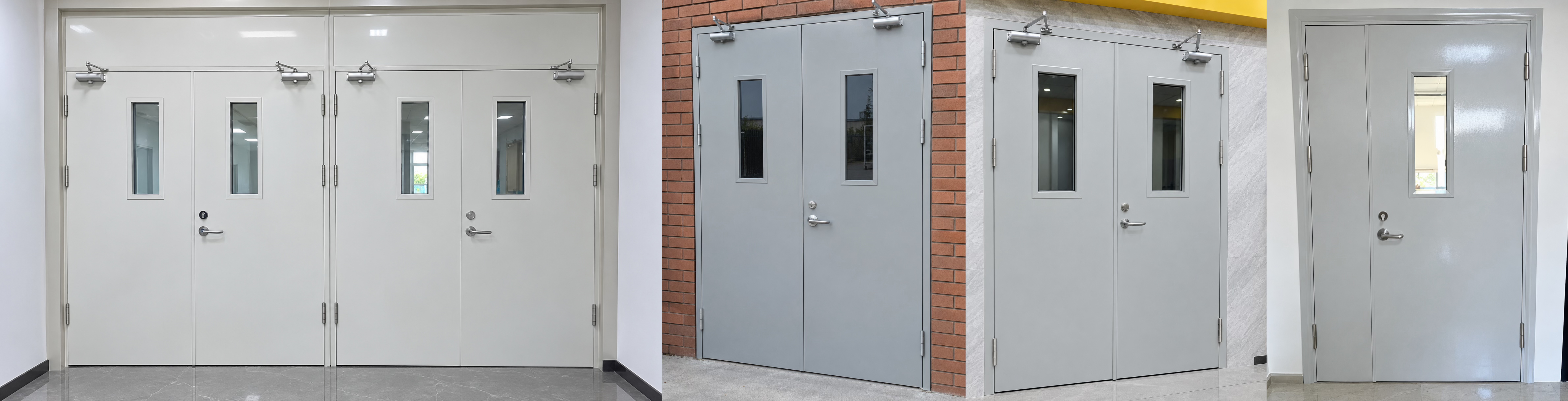
4. Which Buildings Are Better Suited for Wooden Fire Doors?
Wooden fire doors are often preferred in buildings where interior decoration and architectural design are important considerations.
1. Hotels and Hospitality Buildings
Hotels place great importance on interior aesthetics and the overall guest experience.
Wooden fire doors can provide a warm and elegant appearance while meeting the applicable fire safety requirements.
Customers can choose from different wood veneer patterns, decorative finishes, and colors to coordinate with guest rooms and interior design styles.
2. Office Buildings
In modern office environments, wooden fire doors can complement interior doors, wall finishes, and furniture styles.
Within the scope of the approved fire door design, they can be used in designated office areas, meeting rooms, and other interior spaces.
3. Residential Buildings and Apartments
Depending on local building regulations and project specifications, wooden fire doors may be used at apartment entrances and in designated internal fire separation areas.
Their decorative appearance makes them a popular choice for interior architectural design.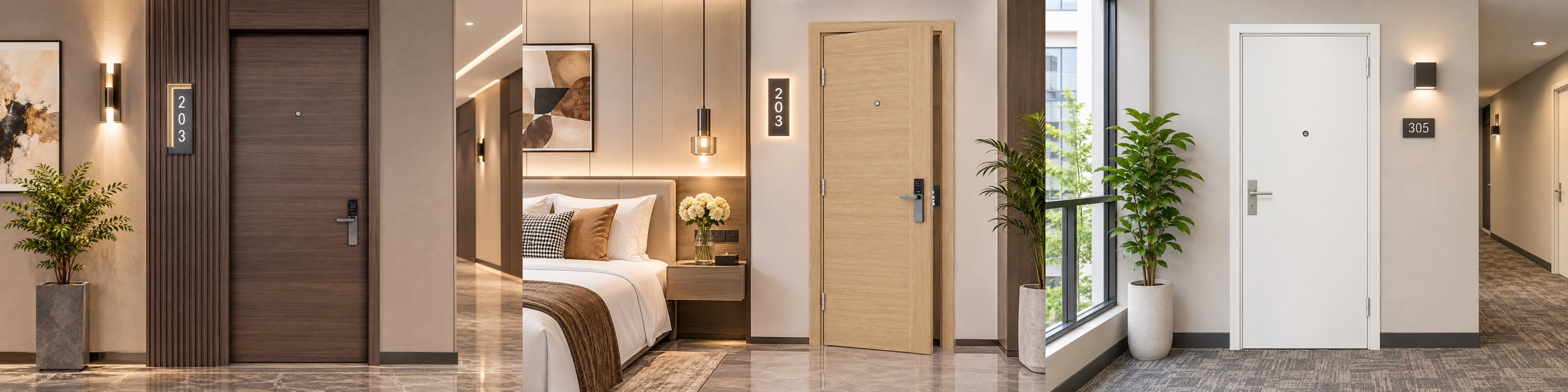
5. Important Factors to Consider Before Choosing Fire Doors
Before purchasing steel or wooden fire doors, project owners and contractors should carefully evaluate the following factors.
1. Required Fire Rating
Determine the required fire resistance period for the project, such as 30, 60, 90, or 120 minutes. The selected fire door must have applicable test evidence and certification for its intended application.
2. Applicable Testing Standards
Different markets may follow different fire testing standards, such as UL 10C, NFPA 252, CAN/ULC-S104, or EN 1634-1.
Before placing an order, confirm the testing standard and certification requirements applicable to the project.
3. Installation Location
Consider whether the fire doors will be installed in industrial facilities, hotels, office buildings, residential buildings, or equipment rooms.
The building's intended use and fire safety design will directly influence the most suitable type of fire door.
4. Appearance and Architectural Design
Steel fire doors are commonly selected for areas where functionality and a modern architectural style are priorities, while wooden fire doors are often used in interior spaces where decorative appearance is important.
5. Hardware and Accessories
Confirm the requirements for hinges, locks, door closers, panic exit devices, seals, and other accessories.
All hardware and accessories must be compatible with the approved fire door assembly.
6. Budget and Project Requirements
Compare the complete product specifications, certifications, hardware configurations, surface finishes, and installation requirements rather than considering only the initial purchase price.
6. KiteWindoor: Fire Door Solutions for Different Project Requirements
KiteWindoor provides steel fire doors, wooden fire doors, and customized door solutions for international construction projects.
We understand that different building projects have different requirements for door materials, appearance, construction, and hardware configurations.
Our product solutions include:
Steel fire doors for commercial and industrial buildings.
Double-leaf steel fire doors for wider openings.
Steel fire doors with glass vision panels.
Wooden fire doors for hotels, office buildings, and interior spaces.
Customized dimensions, surface finishes, and hardware configurations.
Project-specific product evaluations based on architectural drawings and technical specifications.
For projects requiring UL or WH certification, the specific product model, construction details, dimensions, and hardware configuration must be checked against the applicable certification scope.
Whether you are a contractor, distributor, project developer, or building materials supplier, our team can assist you in evaluating your project requirements and selecting suitable fire door solutions.