
Best Selling Waterproof Aluminum Alloy Glass Skylight Vented Daylight Villa Hotel Roof Window Skylight
- Overview
- Recommended Products
Product Overview
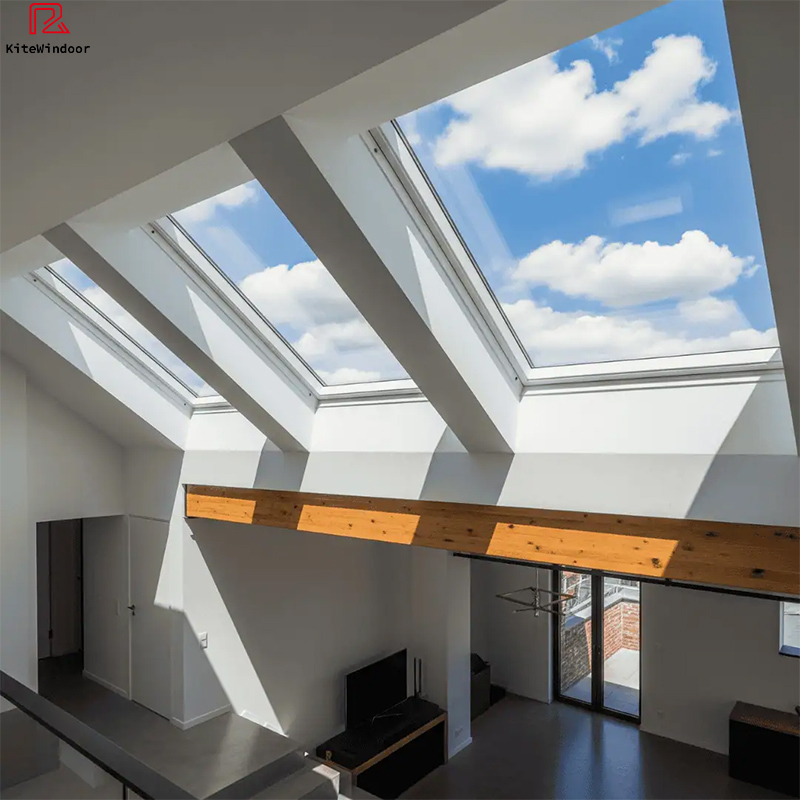
Skylights, as special lighting and ventilation components at the top of buildings, achieve the three core functions of "natural light introduction, air convection, and space beautification" through scientific structural design and material selection. The product is suitable for various building spaces such as pitched roofs, attics, sunrooms, basements, and commercial atriums. It can significantly improve indoor lighting efficiency (the lighting area is 2-3 times that of ordinary side windows), form a three-dimensional ventilation circulation with "upper discharge and lower intake", and improve indoor air quality. At the same time, with a simple and smooth appearance design that integrates with the architectural style, it creates an open and transparent spatial texture. It is an important component in modern architecture that combines practicality and decoration.
Core Structure and Material Selection
(1) Overall Structural Design
The product adopts an "frame-glass-sealing-fittings-drainage" integrated structure, optimizing both structural stability and usage safety:
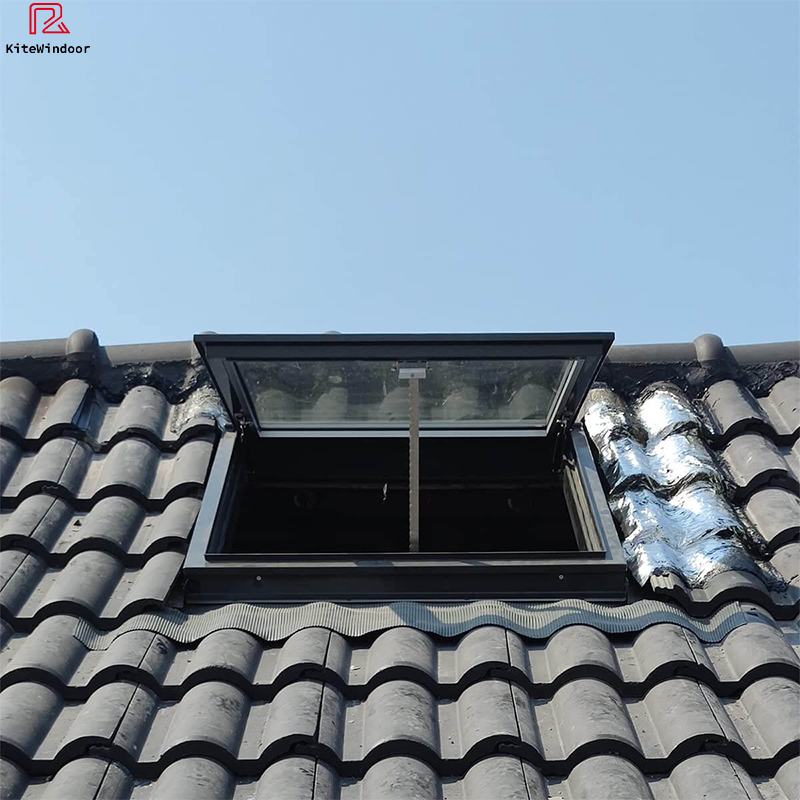
1. Frame System: The main frame uses 6063-T5 grade aluminum alloy profiles (wall thickness ≥ 1.4mm) or insulated aluminum profiles (wall thickness ≥ 1.6mm), with the surface treated by powder coating, fluorocarbon coating, or anodizing, possessing excellent corrosion resistance and UV resistance; the frame adopts a multi-chamber structure design to enhance insulation and heat preservation effects, and simultaneously improve overall deformation resistance, suitable for roof slopes of 15° - 60°.
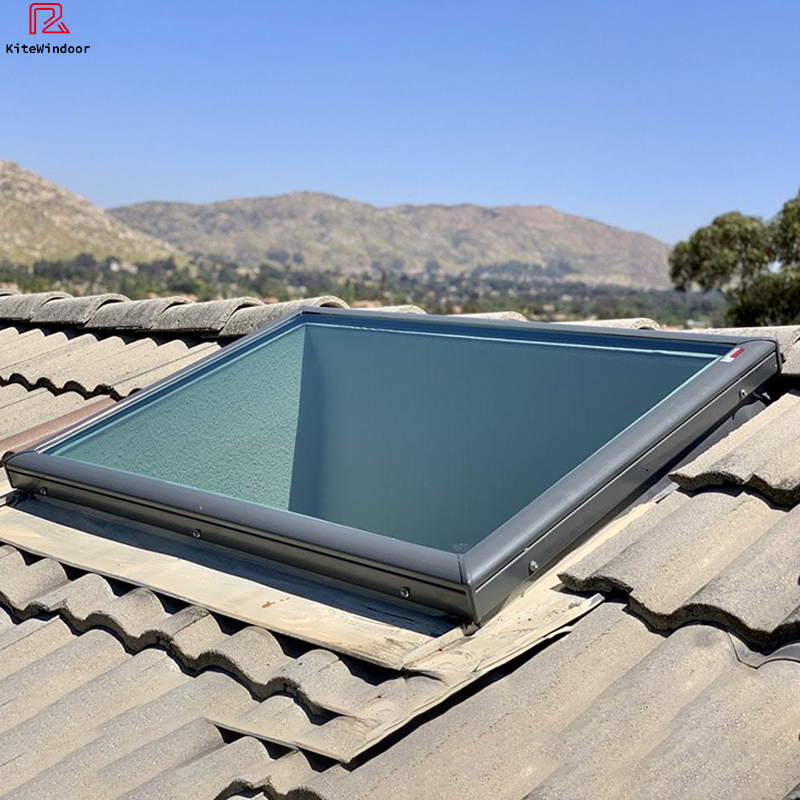
2. Glass System: Standardly equipped with double-layer insulating tempered glass (5 + 12A + 5mm), which breaks into blunt-edged particles, without the risk of splashing and injuring people; optional include laminated tempered glass (PVB film thickness ≥ 0.76mm), Low-E insulating glass, and triple-layer insulating glass (5 + 12A + 5 + 12A + 5mm), respectively enhancing safety protection, energy-saving insulation, and noise reduction; the edges of the glass use butyl sealant + polysulfide sealant double-layer sealing, with an inert gas filling rate ≥ 90%, ensuring a moisture-proof sealing effect.
3. Sealing System: Uses high elasticity EPDM (triple rubber) sealing strips, with a Shore hardness of 50-60 degrees, a temperature resistance range of -40℃ - 120℃, and excellent anti-aging and tear resistance; a multi-layer sealing is formed between the frame and the glass, and between the frame and the roof structure, completely blocking the paths of water and air infiltration.
4. Drainage System: Adopting "internal drainage + external diversion" dual design, the window frame is reserved with hidden drainage grooves and drainage holes (diameter ≥ 12mm), combined with anti-backflow filters and diversion plates, ensuring the rapid drainage of rainwater and avoiding water accumulation leakage; special models for pitched roofs can adjust the drainage direction according to the slope, suitable for different installation scenarios.
5. Opening Mechanism: Supports manual and electric control methods, mainstream opening types include:
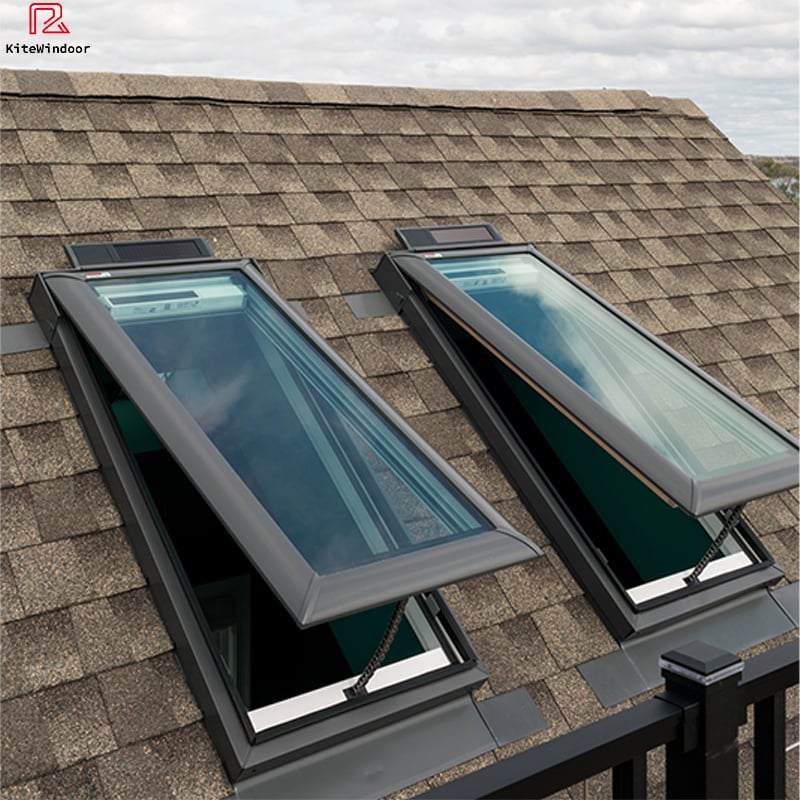
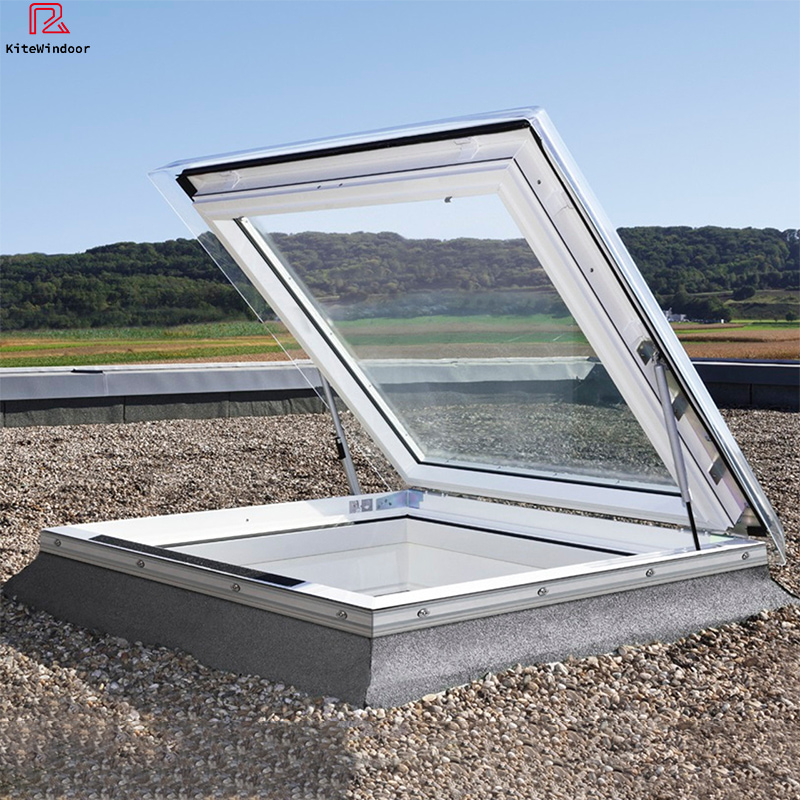
- Upward hanging type: Opening angle ≤ 30°, rainwater is not prone to backflow, ventilation volume is controllable, operation is convenient;
- Middle hanging type: Two-way opening, high ventilation efficiency, suitable for large-sized skylights;
- Horizontal sliding type: Horizontal sliding opening, no occupation of space, suitable for sunrooms, terraces, etc.;
- Electric opening type: Combined with DC speed reducer motor, supports remote control, wind and rain sensor automatic closing, suitable for high-altitude installation or large-weight skylights (maximum load ≤ 100kg).
(2) Key Material Standards
Component Material Requirements Execution Standard
Aluminum alloy profiles 6063-T5/T6 grade, oxide film thickness ≥ 10μm, coating adhesion ≥ 2 grade GB/T 5237—2017
Glass Tempered glass impact resistance meets GB 15763.2, dew point of insulating glass ≤ -40℃ GB/T 11944—2012
Sealing strips EPDM, tensile strength ≥ 10MPa, compression permanent deformation ≤ 20% GB/T 14683—2017
Hardware fittings Stainless steel/zinc alloy material, salt spray test ≥ 48 hours, opening times ≥ 20,000 times GB/T 24601—2009 Sealant - Weather-resistant silicone sealant, Shore hardness 20-30 degrees, tensile bonding strength ≥ 1.5 MPa, in accordance with GB/T 14683—2017
III. Core Performance Parameters/Basic Performance Indicators/Performance Categories Indicators
Wind Resistance Performance Grade ≥ 4 (wind pressure value ≥ 1.5 kPa), customizable up to grade 6 (≥ 2.5 kPa)
Water Tightness Performance Grade ≥ 3 (leakage pressure ≥ 500 Pa), no visible leakage
Air Tightness Performance Grade ≥ 6 (air infiltration per unit seam length ≤ 0.5 m³/(m·h))
Sound Insulation Performance Double-pane insulating glass weighted sound insulation value ≥ 30 dB, triple-pane ≥ 35 dB
Heat Insulation Performance Ordinary aluminum alloy frame heat transfer coefficient K value ≤ 3.5 W/(㎡·K), bridge aluminum frame ≤ 2.2 W/(㎡·K)
Safety Performance Impact resistance ≥ 1 grade, anti-theft performance can be optionally equipped with A or B grades (compatible with anti-picking hardware)
Opening Life Manual awning ≥ 10,000 times, motorized awning motor service life ≥ 8,000 times
Surface color: Supports regular colors such as white, gray, and brown, and can be customized with fluorocarbon spraying, wood grain transfer, etc. for special surface treatments.
Installation and maintenance specifications
Installation requirements
1. Before installation, it is necessary to check the roof structure and opening dimensions to ensure that the flatness deviation of the opening is ≤ 5mm, and the reserved installation gap is 20-30mm;
2. Frame fixation uses expansion bolts or pre-buried iron pieces, with a spacing of ≤ 600mm, ensuring a firm connection with the roof structure; the joint between the frame and the roof is filled with polyurethane foam, and the outside is applied with weatherproof sealant, and the lap joint of the flashing plate and the waterproof sheet is done (lap length ≥ 100mm).
3. Glass installation requires alignment with the groove, with no distortion or breakage of the sealing strip, ensuring uniform glass loading; the electric sunroof needs to be correctly connected to the power supply, and the motor operation and sensing device need to be debugged to ensure coordinated movement.
4. After installation, a water spray test (lasting 30 minutes) is required to be conducted to check for no leakage, and it can be accepted after the opening is smooth.
Daily maintenance
1. Avoid sharp objects hitting or scratching the glass and frame, and do not drill holes or cut grooves on the frame to avoid damaging the structure and sealing performance;
2. Regularly (every quarter) clean fallen leaves, dust, etc. in the drainage channel and drainage holes to ensure smooth drainage; before the rainy season, special attention should be paid to check for water accumulation and leakage prevention.
3. Every six months, check the sealing strips and sealant, if aging, cracking, or falling off occurs, replace or reapply; the hardware accessories need to be lubricated with oil to keep the opening flexible.
4. Glass surface stains can be wiped with a damp cloth, do not use strong acid or alkali cleaning agents; Low-E glass needs to be wiped with a soft cloth to prevent scratching the coating layer.
5. The electric sunroof needs to be regularly checked for the motor, wiring, and sensing device to keep it dry and clean, avoiding moisture-induced short circuits; if not used for a long time, it is recommended to turn it on once a month to ensure the motor operates normally.
Specification size range
- Single panel size: Width 600mm - 1800mm, Height 600mm - 1500mm;
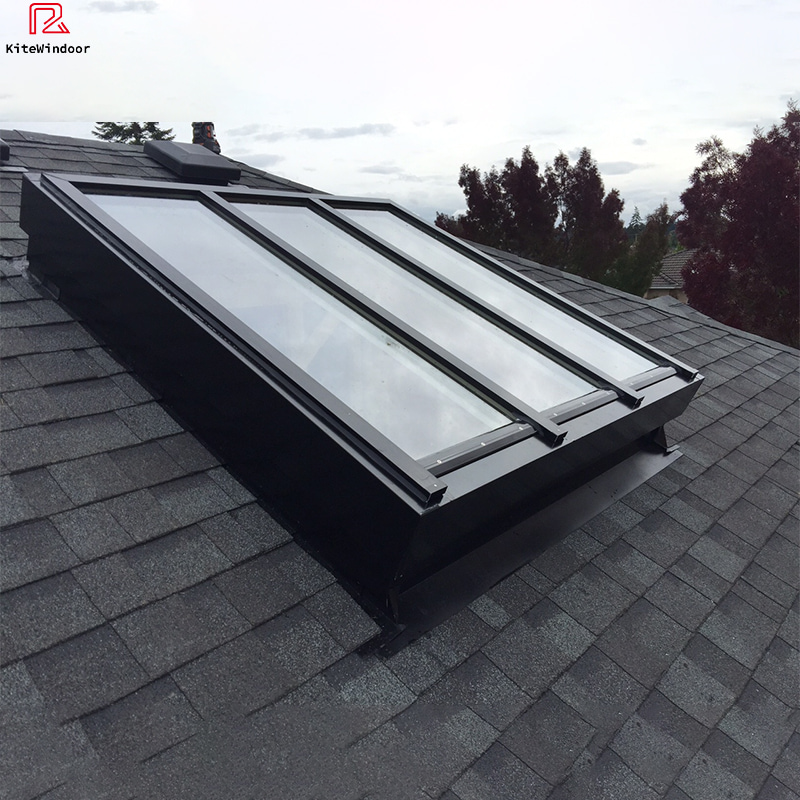
- Combined size: Can be assembled into a multi-panel operable skylight, with the maximum combined width ≤ 4800mm and height ≤ 3000mm;
- Installation slope: Compatible with 15° - 60° pitched roofs. Special slopes can be customized for the frame angle;
Scope of Application
- Civil buildings: villas, garden-style houses, attics, sloping-roofed residences, sunrooms, basement light wells, etc.;
- Commercial buildings: atriums in office buildings, light roofs in shopping malls, terraces in hotels, exhibition centers, etc.;
- Special scenarios: spaces with high requirements for lighting and decoration, such as the restoration of cultural relics buildings, unique homestays, and high-end clubs.
Product Core Advantages
1. Efficient Lighting and Ventilation: The top-mounted design allows for deeper penetration of natural light into the interior, with a lighting efficiency that is over 30% higher than that of side windows; when opened upwards, it creates negative pressure for ventilation, accelerating the removal of indoor stale air and providing better ventilation performance.
2. Exceptional Waterproof Performance: Dual sealing + drainage system combined with standardized installation techniques ensure excellent waterproofing performance, which has been certified by a third-party test. Under normal use, there is no risk of leakage; the junction between the frame and the roof is treated with a water-proof board and waterproof sheet, further enhancing the waterproof effect.
3. Safe and Durable: The aluminum alloy frame is corrosion-resistant and resistant to aging, with a lifespan of ≥ 20 years; safety glass + anti-pickup hardware configuration offers excellent impact resistance and fall protection performance; the electric model is equipped with overload protection and wind-sensing devices, making it safer to use.
4. Energy Conservation and Environmental Friendliness: Low-E insulating glass can block over 80% of infrared rays, providing insulation in summer and heat retention in winter, reducing energy consumption for air conditioning and heating; natural light replaces artificial lighting, reducing electricity consumption, and meeting green building standards.
5. Strong Decorative Value: The simple and elegant exterior design can be integrated with various architectural styles such as Chinese, European, and modern; the large glass area enhances the transparency of the space, and when installed in attic or sunroom scenarios, it can create a viewing and leisure area, increasing the value of the space.
6. Convenient Operation: The manual skylight is easy to open, and the hardware components are smooth without any jamming; the electric skylight supports remote control, timed operation, and automatic control through wind-sensing and rain-sensing, and does not require climbing for high installation, suitable for different usage needs.
FAQ
1. What is the main function of a skylight? What are its advantages compared to ordinary windows?
The core function of a skylight is to increase indoor lighting, promote air circulation and ventilation, and create an open view and transparent space. Compared to ordinary windows, it can utilize the roof space to introduce natural light, has higher light efficiency, and can form an "upward-outward" air circulation, resulting in better ventilation; some skylights also have additional functions such as viewing, heat insulation, and sound insulation, suitable for special spaces like attics, sloping roofs, and sunrooms.
2. Is the waterproof performance of a skylight reliable? Why does it sometimes leak?
A qualified skylight product itself has reliable waterproof performance. Leaks are mostly caused by improper installation or maintenance later on. Common reasons include: aging and cracking of the sealant at the junction of the window frame and the roof; blockage of the drainage channels and drainage holes, preventing rainwater from being drained in time; failure to properly handle the lap treatment of the flashing board and waterproofing sheet during installation; aging and damage of the glass sealant strips, etc.
3. What are the opening methods of skylights? Which one is more suitable for home use?
The mainstream opening methods include up-hanging, mid-hanging, sliding, folding, and electrically operated. For home use, up-hanging or electrically operated up-hanging are preferred. During the up-hanging opening, rainwater will not backflow, and the ventilation volume is controllable, making the operation convenient; the electrically operated type is more suitable for installation on high places (such as attic sloping roofs), as it does not require manual climbing to open, and has higher safety.
4. Do skylight glasses require special configuration? Can they be replaced with tempered glass or Low-E glass?
Skylight glasses require special safety glass. The standard configuration is usually tempered glass or laminated tempered glass, which has no sharp fragments when broken, avoiding injuries from falling. According to the needs, it can be upgraded to insulating tempered glass (improving insulation and sound insulation performance) or Low-E insulating glass (enhancing heat insulation and energy-saving performance), but the glass thickness must be compatible with the skylight frame.
5. Can skylights be installed on high-rise residences or sloping roofs? What are the installation requirements?
They can be installed, but they must meet the building structure and safety standards. When installing on sloping roofs, it is necessary to confirm the roof slope (usually suitable for 15° - 60° slope), and select the appropriate skylight model for sloping roofs; for high-rise residences, the window frame fixation structure needs to be reinforced to ensure the wind pressure resistance meets the standards, and waterproof sealing and anti-fall measures should be done well. It is recommended to be constructed by a professional team.
6. Do skylights need regular maintenance? What are the key points of daily maintenance?
Regular maintenance is necessary to ensure the long-term use effect. Key points of daily maintenance: Regularly clean the leaves, dust, etc. in the drainage channels and drainage holes to avoid blockage and water accumulation; Check whether the sealant of the window frame and the roof, as well as the glass sealant strips, are aging and replacing damaged parts in time; Add lubricating oil to the hardware components (hinges, handles, etc.) of the skylight every six months to keep the opening smooth; Regularly clean the glass to avoid sharp objects from scratching.
7. How is the heat insulation and sound insulation effect of skylights? How to improve it?
Ordinary single-layer glass skylights have average heat insulation and sound insulation effects. Upgrading the configuration can significantly improve them. Selecting insulating glass (such as 5 + 12A + 5mm) or Low-E insulating glass can enhance the insulation performance and reduce heat conduction between indoor and outdoor; Combining with a sealing performance good TPE rubber strip can improve the sound insulation effect and isolate external noise. In addition, installing skylight sunshades (such as honeycomb curtains, blinds) can further optimize the heat insulation and privacy protection effect.
8. How long does a skylight have a lifespan? What factors affect its lifespan?
The lifespan of a high-quality skylight is usually 15 - 20 years. It is affected by the material, installation process, and maintenance frequency. The window frame material (aluminum alloy, which has stronger corrosion resistance, has a longer lifespan) and glass quality, as well as the durability of the hardware components, are the core factors determining the basic lifespan of the skylight; Standard installation and regular maintenance can effectively extend its service life.
9. Can skylights be equipped with shading facilities? What shading methods are available?
It can be installed. Common shading methods include built-in shading curtains (honeycomb curtains, blinds, roller blinds), external shading canopies, shading blinds, etc. Built-in shading curtains are aesthetically pleasing and easy to operate, and do not affect the opening of the skylight; external shading canopies have better shading and heat insulation effects, but they need to consider wind resistance and waterproofing issues, and are suitable for low-rise buildings or sunrooms.
10. How to choose between electric and manual skylights? Are the motors of electric skylights prone to failure?
Manual skylights have high cost performance and are easy to operate, suitable for installation in lower positions and scenarios with low opening frequency; electric skylights are more labor-saving, suitable for high-altitude installation or large-sized skylights, and can be paired with intelligent control systems to achieve remote control and automatic closing upon wind or rain sensing, suitable for families seeking convenience. Qualified electric skylight motors have a lifespan of 8-10 years. With daily dust and moisture protection maintenance, they are less likely to fail.